Deutsch
 English

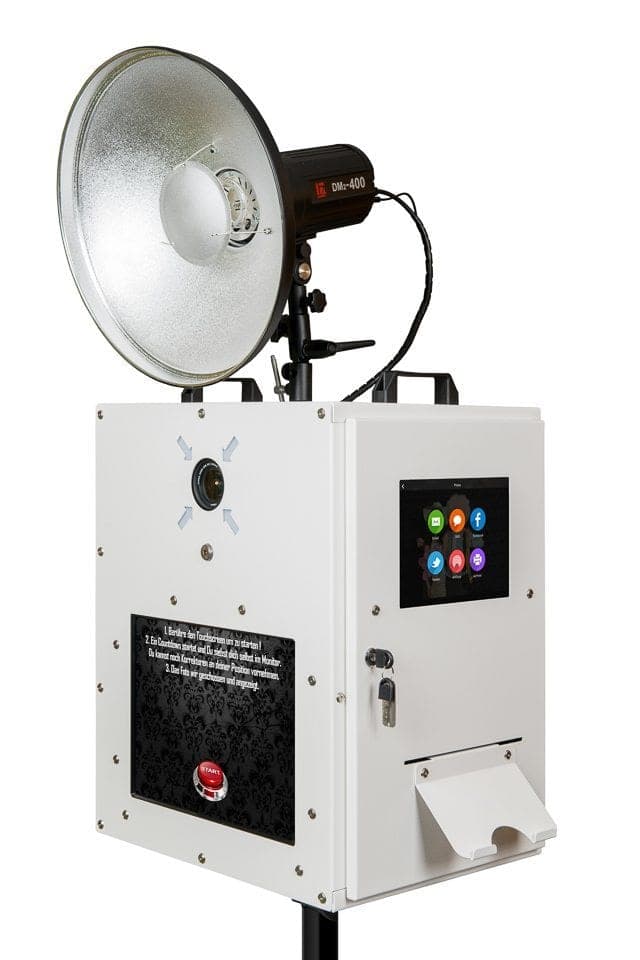
An owned photo booth for corporate marketing costs between €3,040 (Photobooth Ready, housing with PC and software) and €7,690 (Photobooth Profy with illuminated advertising panels) at fexon, both including 19 % German VAT and as of October 2026. Measured against rental prices of €300 to €800 per event, an owned booth has often paid for itself after six to ten uses. This article explains why companies use photo booths in marketing, what to consider and which system suits which use.
Why does a photo booth work as an advertising medium?
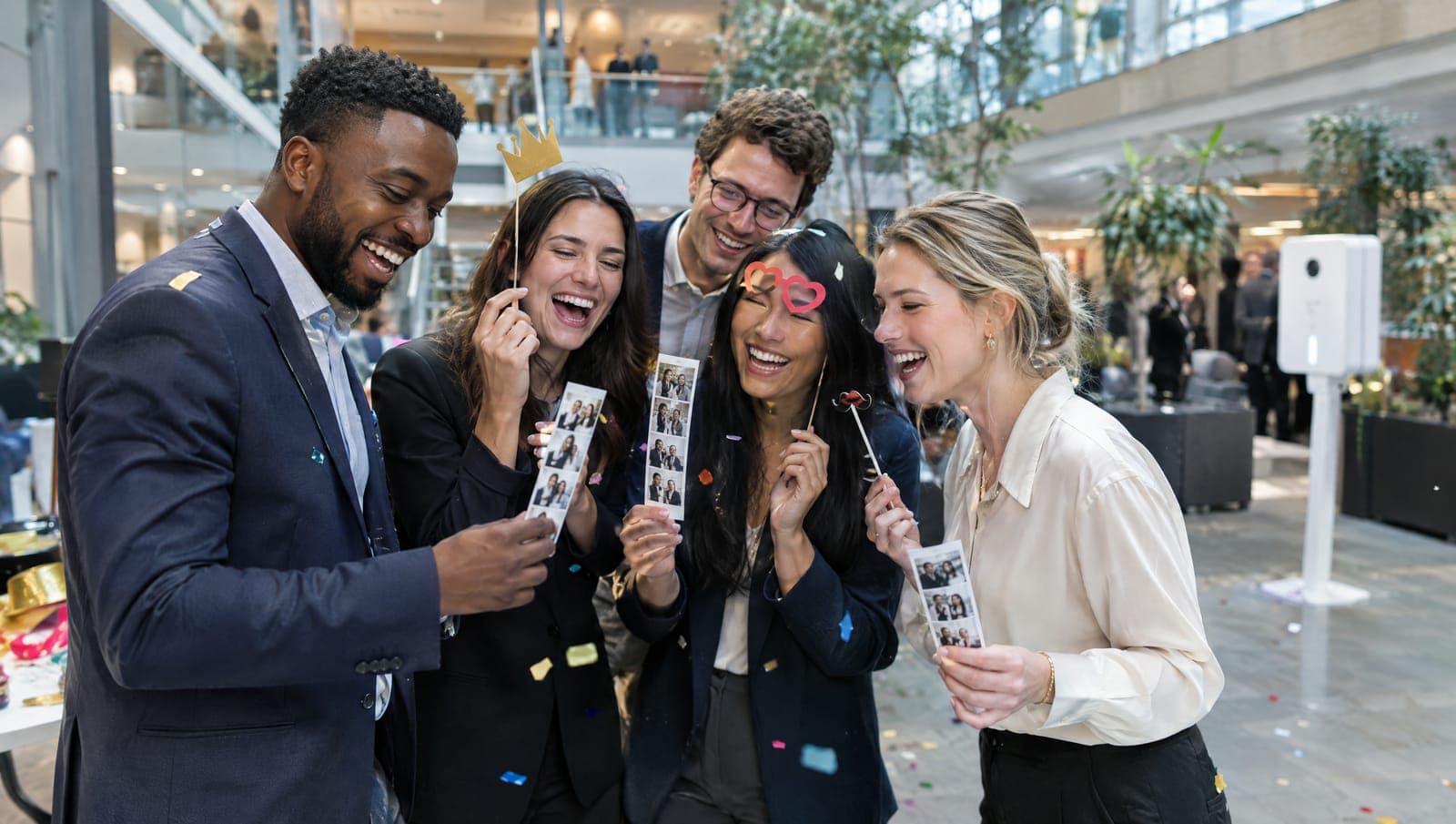
A photo booth is entertainment that guests use voluntarily, and at the same time an advertising medium that works on three levels: on the housing (a wrap with logo and brand colours), on the photo (automatically inserted logos, text and frames) and when sharing (the photo travels with your branding into messengers and social networks). Unlike a roll-up banner or an advert, it creates a keepsake that guests take home and show around of their own accord.
The seven benefits at a glance
1. Brand awareness
A booth designed with your company logo and brand colours attracts attention on the stand or in the foyer. Every photo carries your branding, and when guests share their pictures your brand reaches an audience that was not even there. We handle wraps via digital templates, see photo booth branding.
2. Customer loyalty
The booth is an interactive experience. Guests associate the fun of the shoot with your company, and the print ends up on the fridge or at the desk. That is an emotional connection that a promotional gift rarely achieves.
3. User-generated content
Photos from the booth are authentic because real people take and share them voluntarily. With the guests’ consent they are suitable for your own channels and come across as more credible than agency imagery. The dslrBooth software offers sharing by e-mail, QR code and AirDrop as well as online albums.
4. Lead generation
In dslrBooth a prompt can be shown before sharing: the guest enters their e-mail address and confirms a text you have worded. This creates contacts for later campaigns. How to set this up technically is shown in the FAQ consent before sharing. The legal wording of the consent (GDPR, competition law) must be checked by your own company.
5. Versatile uses
Trade fairs, company anniversaries, product launches, store openings, staff parties, open days, recruiting events: a photo booth fits any occasion where people come together. Layouts and start screens can be adapted per event without any new hardware.
6. Memorable experiences
Shared photos with colleagues or friends create positive memories that stay linked to your company. At staff events this strengthens team spirit, at customer events it strengthens loyalty.
7. Cost efficiency
Compared with advertising or exhibition stands the investment is manageable and one-off. Running costs arise only for print media: a media kit for the DNP DS620 with 800 prints in 10 × 15 cm costs €139, i.e. around 17 cents per photo.
Worked example: own booth or rental?
Example calculation with assumptions, not a guarantee: a company uses a photo booth at eight events a year. In the example, rental including branding costs €600 per event, i.e. €4,800 a year. A Photobooth Ready with camera (+€500), studio flash (+€350) and DNP DS620 printer (+€1,590) costs €5,480 once. After the first year the owned booth has almost caught up; from the second year on the company saves most of the rental cost. Added to that, branding and layouts are set up permanently and can be used at any time without lead time. The full calculation is in the guide Rent or buy a photo booth.
Which booth suits corporate marketing?
- [Photobooth Profy](/en/product/photobooth-profy/): 21.5-inch touchscreen, illuminated base with large advertising panels, outer frame in white, brushed stainless steel, wood effect or custom RAL colour. Developed for trade fairs, hotels and marketing campaigns.
- [Photobooth Ready](/en/product/photobooth-ready-1-1/): 23-inch touchscreen, 22 kg, fits in any small car. For companies that use the booth at changing locations.
- [Photobooth Mirror](/en/product/photobooth-spiegel/): mirror booth with animations, for galas and customer events with high expectations of presentation.
The photo booth comparison shows which booth suits you. The page Photo booths for companies gives an overview for marketing managers.
Three questions from practice
How does a photo booth help generate leads? By asking for e-mail addresses before sharing or printing. The addresses are stored in the software and can be exported.
Which events are suitable? All occasions with waiting time and a good mood: trade fairs, corporate events, product launches, openings, anniversaries, but also weddings and private parties if the booth is rented out.
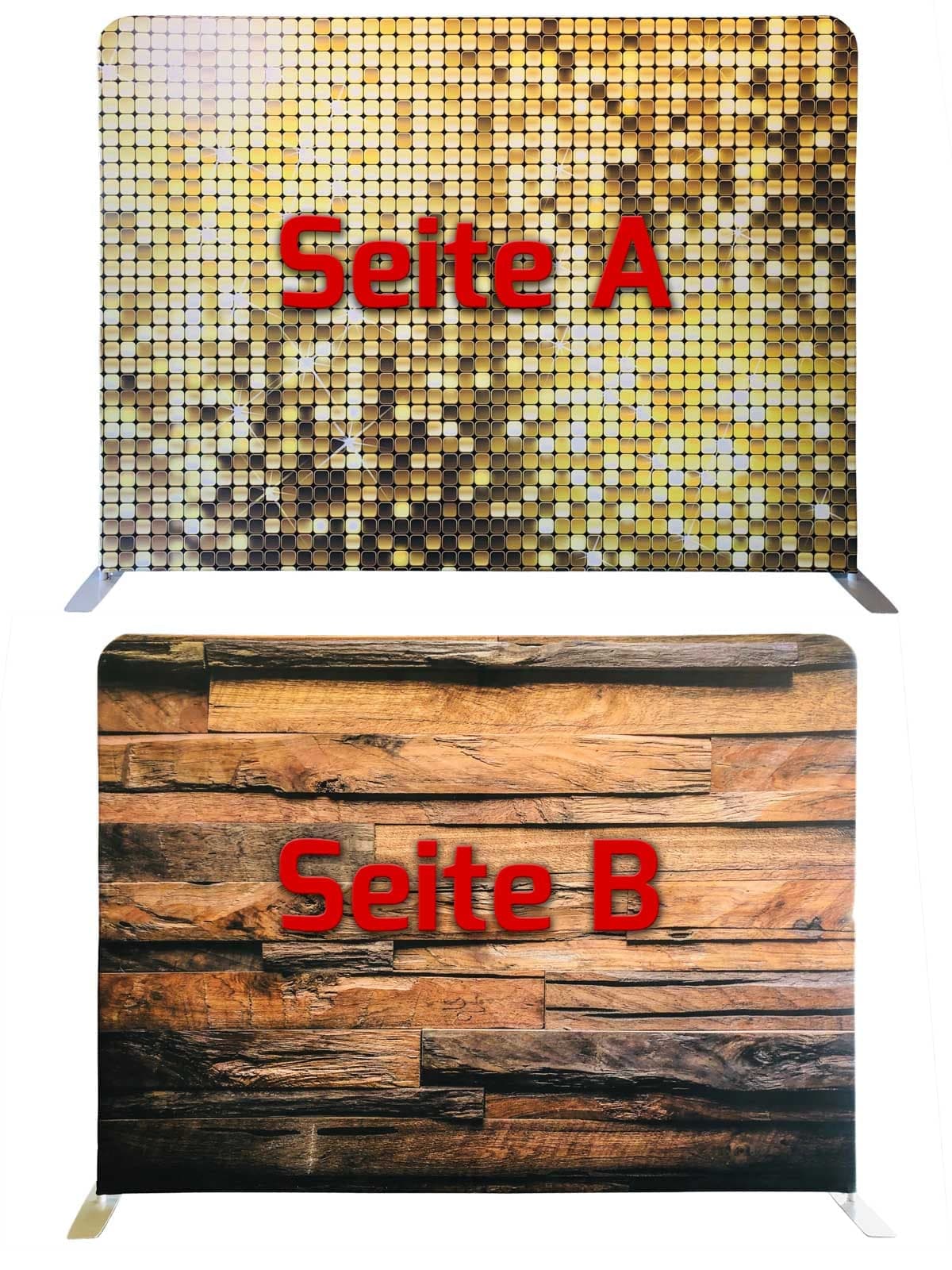
What needs to be considered in operation? Power at the location, a space of about two by three metres including backdrop, and a contact person for changing media in the printer. With the backdrop system and a buzzer the stand is complete.
How do you measure success?
dslrBooth counts shots, prints and shares per event and shows them in the Booth Copilot app. For marketing managers three figures are meaningful: the number of shared photos (reach), the number of captured e-mail addresses (leads) and the number of prints (keepsakes that leave the stand). A company hashtag in the layout makes the shared pictures findable in social networks, so that the response can be tracked after the event.
Which mistakes should companies avoid?
First: branding without benefit for the guest. A photo that consists only of a logo is not shared; the guest must look good, the logo stays in the frame. Second: no power planning at the stand. The booth needs a socket, the printer too. Third: no contact person for changing media. At 300 prints per event one kit is enough; at multi-day trade fairs you need supplies and a briefed person.
Conclusion
A photo booth in corporate marketing increases visibility, produces authentic content and delivers contacts when needed. Anyone planning more than five or six uses a year is better off with an owned booth from Greiz than with rental. For a quotation including branding, use the enquiry form.
Updated: