Deutsch
 English

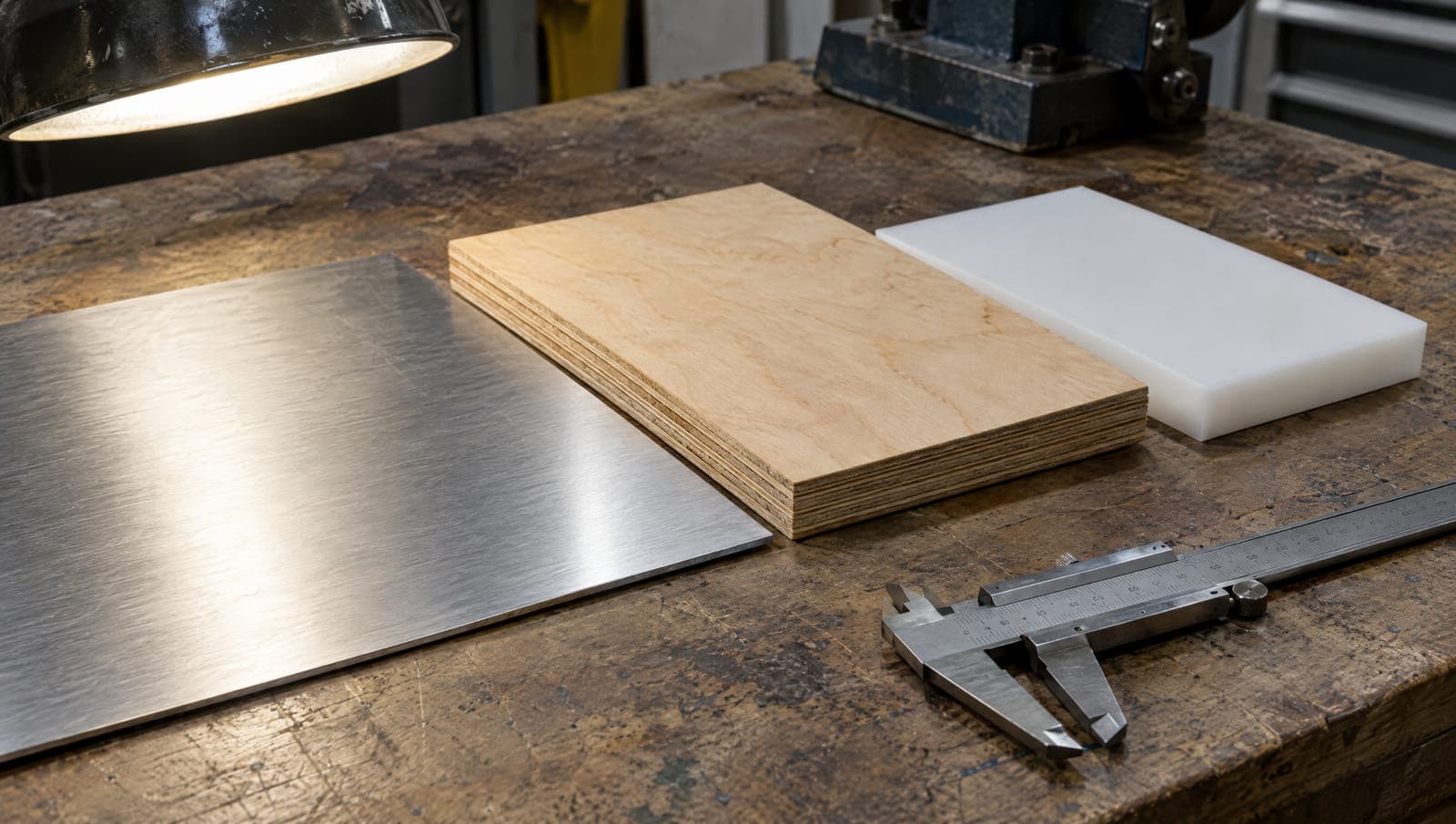
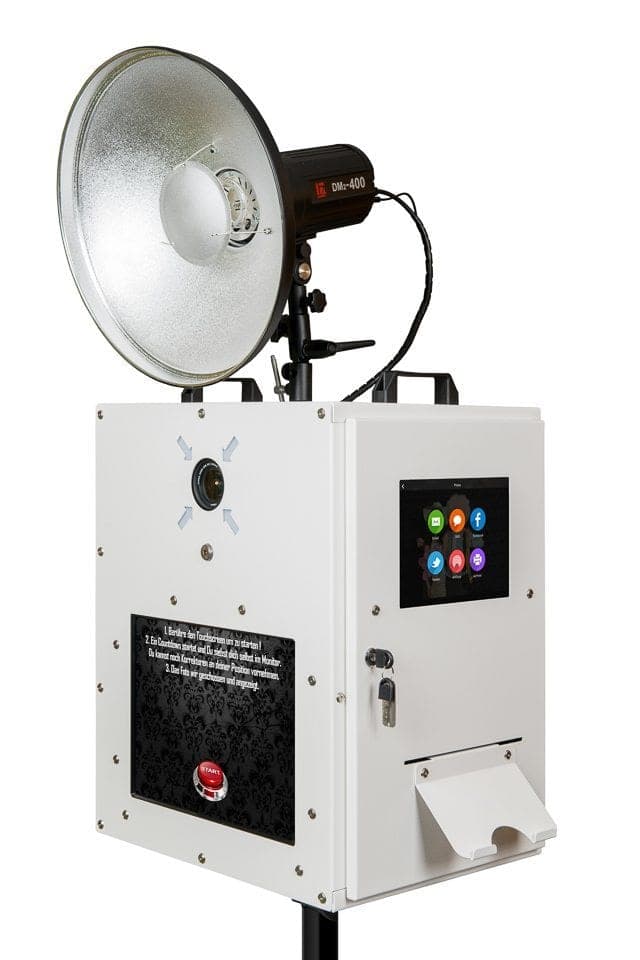
The housings of all fexon photo booths are made of aluminium that we laser-cut, bend and have powder-coated ourselves in Greiz; at 130 × 50 × 50 cm the Photobooth Ready therefore weighs only 22 kg without printer. Many inexpensive photo booths on the market, by contrast, are made of coated wood-based panels or plastic. This guide explains what the material means for rental operators and companies in everyday use: when carrying, after the hundredth transport, with heat inside the housing and at a later resale.
Why does weight matter so much?
A photo booth is moved at least four times per event: into the car, into the hall, back into the car, into storage. Aluminium has about a third of the density of steel and, at the same rigidity, is considerably lighter than wooden panels of the required thickness. One person can carry the Photobooth Ready alone and set it up in under ten minutes; it fits into a small car. In our experience with third-party equipment in rental, wooden booths of the same size often weigh considerably more and need two people or a sack truck.
How do the materials behave with transport damage?
- Powder-coated aluminium: the coating is baked on at around 200 degrees and is more scratch- and impact-resistant than wet paint. Small dents remain dents, but edges do not chip, and the material does not absorb water.
- Wood-based panels (MDF, plywood) with foil or paint: edges splinter on impact, foils lift at the corners, moisture makes panels swell. After a season of frequent transport it shows.
- Plastic: light and cheap, but brittle in the cold and deformable in the sun; holes for accessories tear out easily. Scratches cannot be repaired.
We show our housings on the manufacturer page; the production route from CAD model to powder coating is described in the article How a fexon photo booth is made.
What does the material mean for the technology inside?
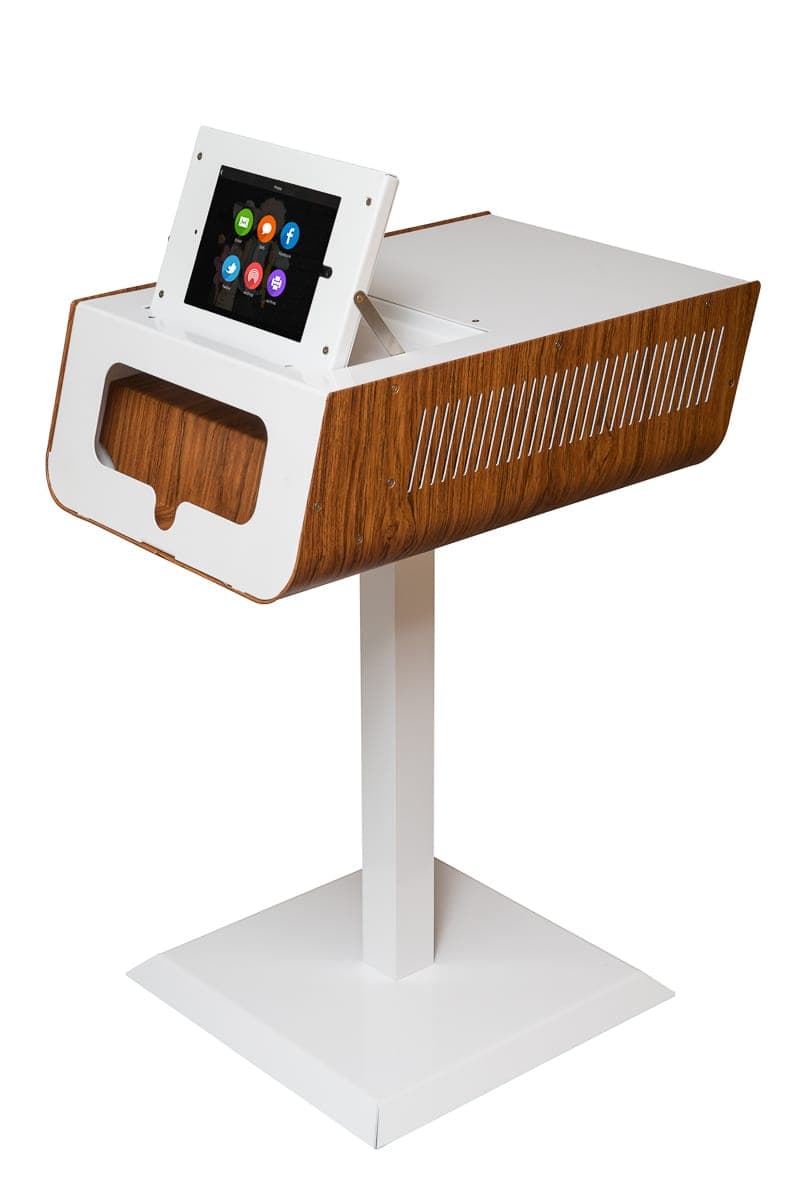
Computer, printer and flash generate heat. Aluminium conducts heat well and allows thin walls with precisely laser-cut ventilation openings; we calculate the airflow already at the design stage. Wood insulates, so wooden booths need larger openings or fans. With plastic there is the added problem that heat warps the material. For the printer it is also important that the media compartment stays dust-free: laser-cut aluminium parts close precisely, and lockable flaps such as on the Natty kiosk are possible without rework.
How does the material affect branding and looks?
Powder-coated aluminium is a smooth, even surface on which foils adhere without bubbles and can be removed without residue. Rental operators can therefore wrap the booth afresh for each client and afterwards use it in its base colour again, see photo booth branding. On the Natty the outer frame is interchangeable: white, blue, red, black or wood-effect foil without changing the housing. On the Profy, brushed stainless steel, wood effect and custom RAL colour are available.
What about resale and service life?
A photo booth is a capital item that rental operators often pass on after a few years when they move to a new model. An aluminium housing can be recoated or rewrapped and kept in service with current technology (new mini PC, new camera) because the installation dimensions stay the same. We supply spare parts such as doors, rear panels, tripod mounts and frames for models that have been built for more than ten years. Wooden and plastic booths look worn after a few seasons and are correspondingly hard to sell.
Comparison at a glance
| Criterion | Aluminium (fexon) | Wood-based panel | Plastic |
|---|---|---|---|
| Weight, Ready size | 22 kg | usually considerably more | low |
| Surface | powder coating, scratch- and impact-resistant | foil or paint, sensitive edges | injection moulding, permanent scratches |
| Moisture | unaffected | swells | unaffected |
| Heat dissipation | good | poor, fans required | medium, warps in heat |
| Branding | foil adheres, removable without residue | foil lifts at edges | foil adheres, warping possible |
| Spare parts after years | available | depends on maker | rare |
| Price | higher purchase price | low | low |
When is wood or plastic still acceptable?
For a single private party or a booth that never leaves the house, a wooden or plastic housing is sufficient. As soon as the booth is transported regularly, tied to client expectations and a rental price of several hundred euros per event, or stands as an advertising medium for a brand, aluminium pays off. A look at the total cost over several years is in the guide How much does a photo booth cost?.
How do you care for an aluminium housing?
The powder-coated surface is cleaned with a damp cloth and mild cleaner; solvents are not needed and should be avoided. Foils can be removed without residue using heat from a hair dryer. Scratches in the coating are touched up with a paint pen in the matching RAL colour; deep dents in a panel are replaced with a new part from Greiz, because every panel is available individually. Screws and magnetic catches are checked once a season.
What does weight say about rigidity?
Light and rigid are not mutually exclusive with aluminium: rigidity comes from the bends and the closed shape of the housing, not from material thickness. That is why the Photobooth Ready at 22 kg can carry a 23-inch touchscreen, computer, camera and a four-kilogram printer without the housing warping. With wooden booths the same rigidity is bought with thick panels that drive up the weight.
A further advantage of metal shows in earthing and shielding: the closed aluminium housing protects computer and cables from static charge and mechanical knocks, and lockable flaps secure printer and electronics from curious hands during unattended operation.
Conclusion
The material decides how often you can carry a photo booth, what it looks like after two seasons and whether it can still be sold later. Aluminium from our own production is the reason why our systems are in use in our own rental fleet and with more than 1,000 customers across Europe. The photo booth comparison compares all systems with dimensions and weight.
Updated: