Deutsch
 English

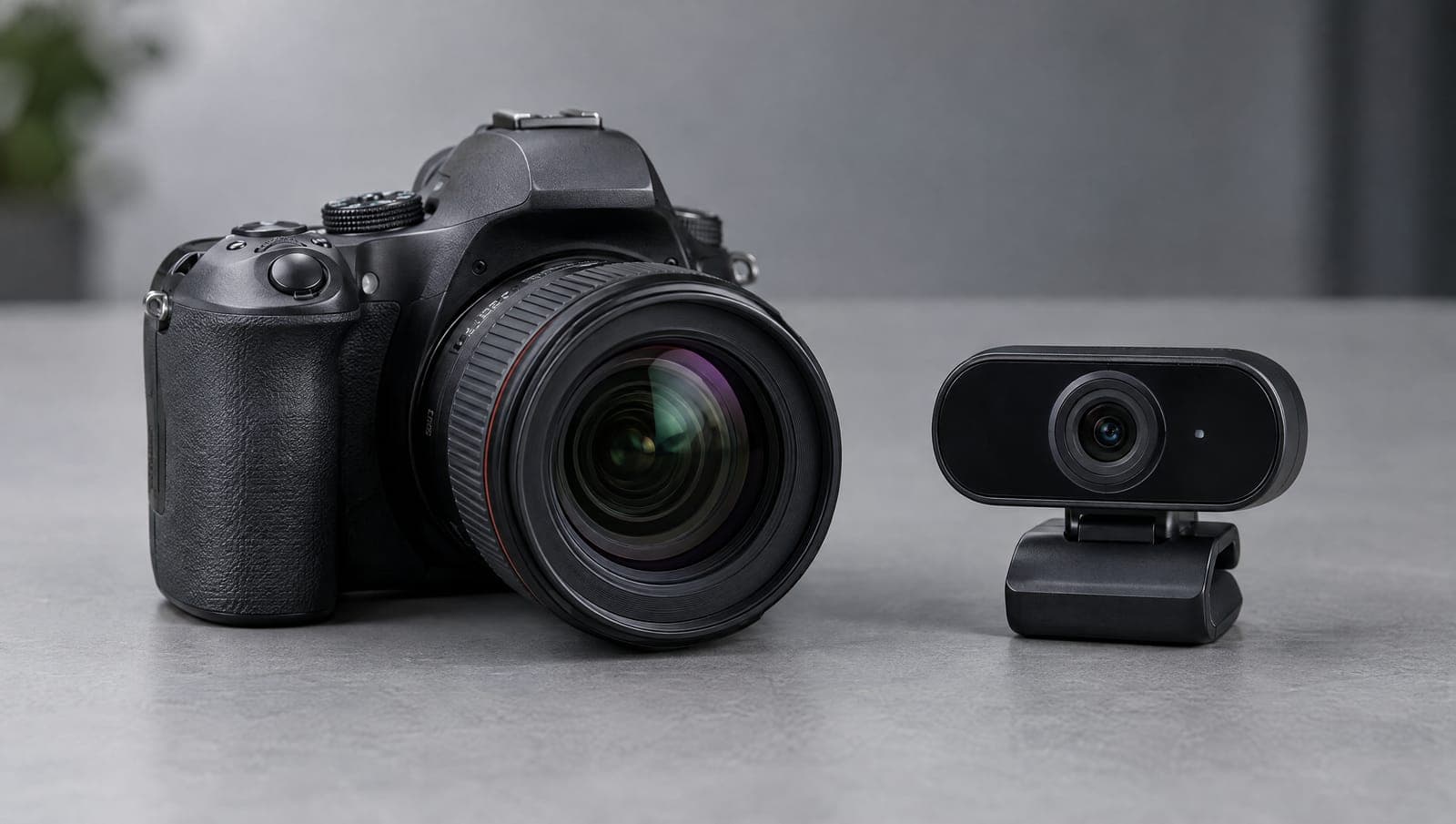
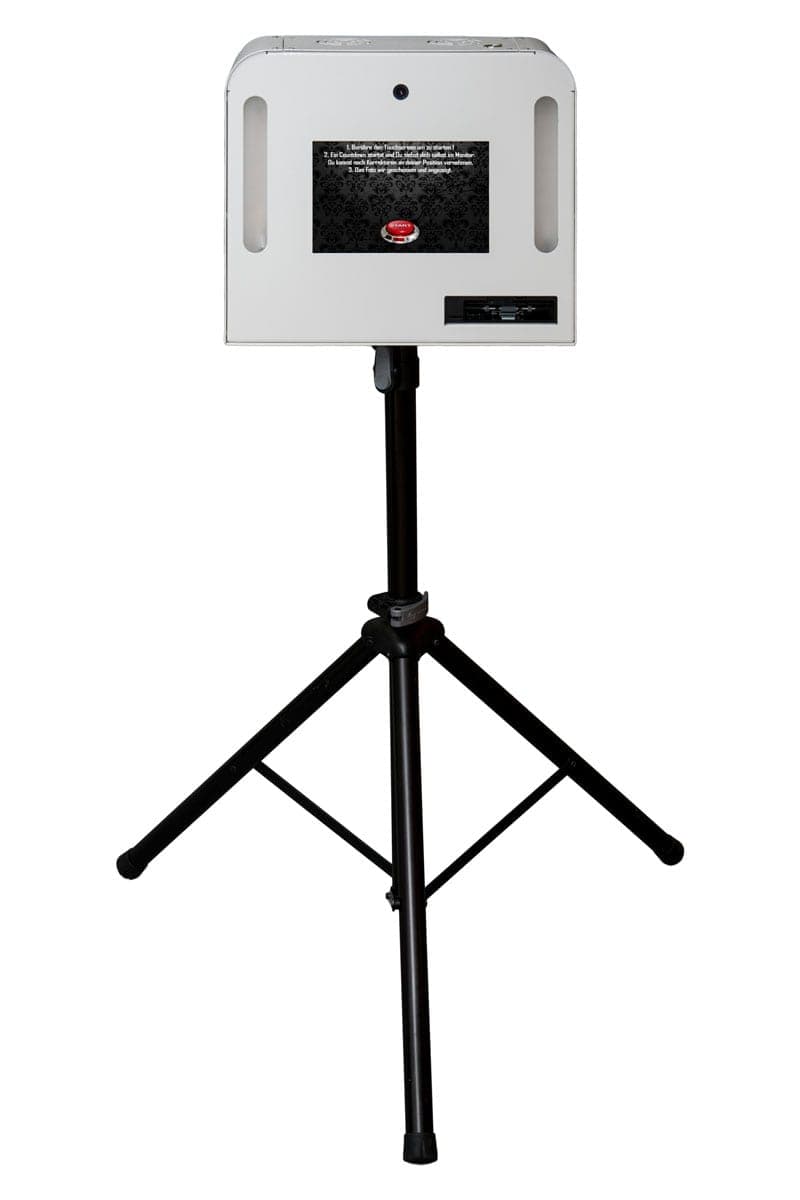
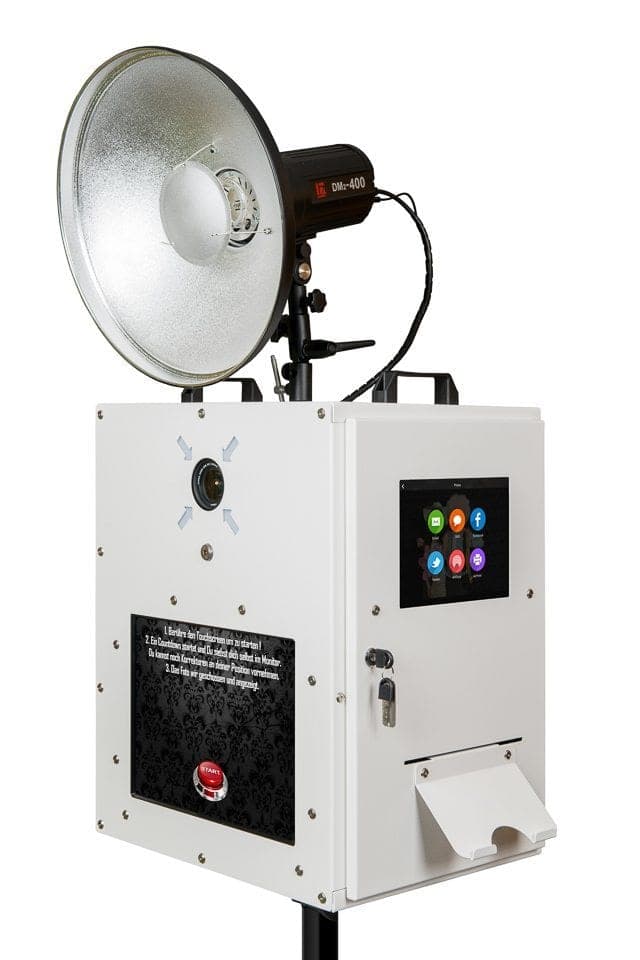
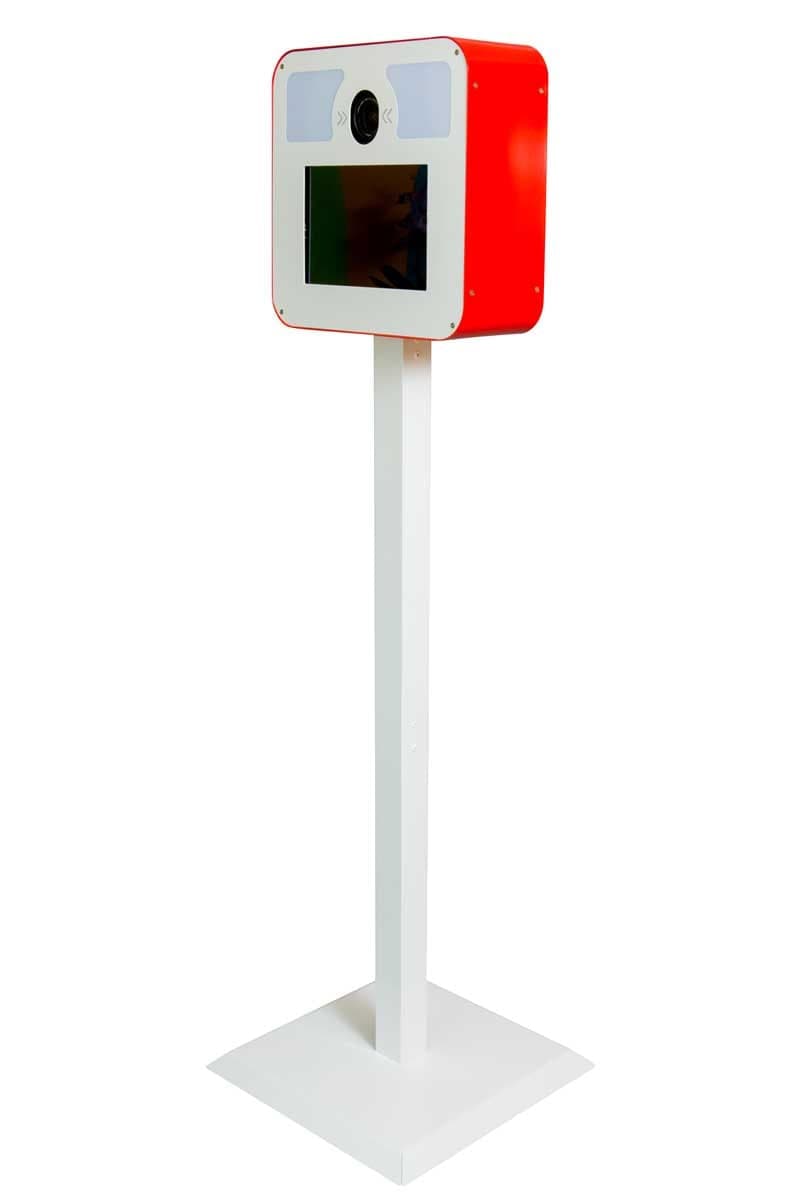
Two camera types work in our photo booths from Greiz: Canon DSLRs (EOS 2000D at +€500, EOS 200D at +€600 in the configurator) in the Ready, Natty, Profy and Mirror, and a Logitech C920 webcam in the Photobooth Selphy shipping booth (complete €2,990, as of October 2026). The choice between DSLR and webcam determines image quality, price and maintenance effort of the booth. This guide explains the differences and names the uses for which each option is the better one.
How does image quality differ?
A DSLR has a large sensor (APS-C in the Canon models) and an interchangeable lens. Together with a studio flash this produces photos with clean skin tones, low noise and a depth of field that separates people from the background. The quality is sufficient for 15 × 20 cm prints and for reuse in social media campaigns.
A webcam has a small sensor and a fixed lens. With good continuous light, such as the LED light of the Photobooth Selphy, it produces decent photos for 10 × 15 cm and for sharing on a smartphone. In low light the image visibly shows noise, and a flash cannot be synchronised. For guests who share the photo immediately the difference is often small; on the print and for demanding clients it is noticeable.
What do DSLR and webcam cost?
| Criterion | DSLR (Canon EOS 2000D / 200D) | Webcam (Logitech C920) |
|---|---|---|
| Surcharge in the configurator | €500 / €600 | included in the complete Selphy |
| Light | studio flash with beauty dish (+€350) or TTL flash | LED continuous light (included) |
| Power supply | mains adapter (included with the camera option) | via USB from the computer |
| Wear parts | shutter, sensor cleaning, USB cable | practically none |
| Replacement if faulty | camera replaceable, lens separate | webcam replaceable, around €100 |
An existing camera can often be reused: the models that work with dslrBooth are listed on the page Supported cameras. The software developer now also supports mirrorless Canon, Nikon and Sony cameras.
What do both options require in operation?
DSLR: the camera works in manual mode with fixed values for aperture, ISO and shutter speed; the flash power is matched to them. After transport, focus and flash must be checked. Permanent live view strains the sensor, which is why dslrBooth only switches it on during the countdown. The help centre answers typical questions, for example camera clicks before the shot and background too dark.
Webcam: no settings on the device, no flash synchronisation, no mechanical parts. The webcam is the right choice when the customer sets up the booth without instruction, as in shipping rental with the Selphy. The drawback: image quality and lighting can hardly be influenced.
Who benefits from the DSLR?
- Rental operators who advertise image quality and offer 15 × 20 cm prints.
- Wedding photographers whose clients expect studio-level photo quality, see Photo booths for wedding photographers.
- Companies that reuse photos from the booth in campaigns.
- Green-screen and AI background removal: both functions benefit from clean edge rendering and even flash light.
For whom is the webcam enough?
- Shipping rental: the booth goes to the customer by parcel; set-up without prior knowledge, no flash to adjust.
- Permanent installations in hospitality or leisure parks, where photos are mainly shared and rarely printed.
- Entry with a small budget: the complete Selphy costs €2,990 and includes tablet, webcam, printer and software.
- Children’s parties and events where the experience matters more than print quality.
Can you switch from webcam to DSLR later?
Not within the Selphy, because housing, lighting and tripod are designed for the webcam. Anyone who starts with the Selphy today and needs more quality later usually adds a Photobooth Ready or Natty as a second system. With the Ready, Natty, Profy and Mirror, on the other hand, the DSLR can be retrofitted at any time, because the camera connects via USB and the mount is prepared.
Which camera to choose: EOS 2000D or EOS 200D?
Both deliver 24 megapixels and are supported by dslrBooth. The EOS 200D has a tilting display and faster live-view autofocus, which makes on-site set-up easier; the EOS 2000D is the less expensive choice for pure booth operation with fixed settings. Both cameras are from existing stock; should the models become unavailable, we name an equivalent alternative in the configurator.
What does the camera choice mean for the printer?
The file size of the DSLR (24 megapixels) is more than sufficient for printing at 10 × 15 or 15 × 20 cm; dslrBooth scales the shot to the layout. Webcam photos at 1920 × 1080 pixels are enough for 10 × 15 cm but look softer at 15 × 20 cm. The camera plays no role in print time, which depends solely on the printer.
What role does the lens play?
The 18-55 mm kit lens of the Canon models is used in the booth at around 24 to 35 mm focal length so that groups of four to six people fit into the picture at a distance of two metres. Autofocus is usually switched off and the focus set manually once to where the guests stand; at f/8 there is enough depth of field for people in front of and behind that plane. A faster lens brings no advantage in the booth because the studio flash provides the light. With the webcam this adjustment is unnecessary: it focuses automatically, but needs even continuous light, which is built into the Selphy.
Ideally, check both options with your own eyes before buying: on request we send you sample prints from the Ready with DSLR and from the Selphy with webcam so that you can compare print quality directly before deciding on a system.
Conclusion
The DSLR is the right choice when photo quality is what you sell; the webcam when simplicity and price count. We have run both concepts for years in our own rental fleet. The photo booth comparison gives an overview of all systems with their camera type.
Updated: